Funded by the European Union. Views and opinions expressed are however those of the author(s) only and do not necessarily reflect those of the European Union or the European Education and Culture Executive Agency (EACEA). Neither the European Union nor EACEA can be held responsible for them.
1.4 Use Digital Platforms to Sell and Explain Products
Estimated learning time
6 to 8 minutes
Digitalisation is not only useful for selling. It can also strengthen production records, quality control and traceability. When a food product moves from ingredient to finished item, important information can easily become scattered across notebooks, messages, invoices and memory. Digital records help keep this information easier to find and easier to check.
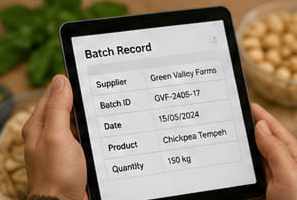
Traceability begins with practical details: supplier name, ingredient origin, delivery date, batch number, storage condition, production date, recipe version, shelf-life test and customer complaint record. These details support food safety, quality consistency and honest product communication. They also make it easier to respond if a batch needs to be checked or if a buyer asks for evidence behind a claim.
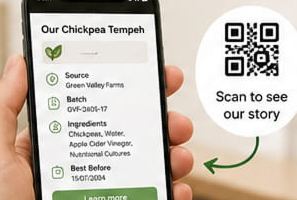
A small producer does not need to start with advanced blockchain systems. The first step can be a shared spreadsheet, digital batch form or folder system where documents are saved in the same way each time. QR codes can come later, once the information behind them is accurate and useful. A QR code is only helpful if it connects to clear, maintained content.
Digital records can also support sustainability and sourcing claims. If a product describes an ingredient as local, organic, responsibly produced or lower waste, the business should be able to show the records that support the statement. Good traceability protects trust because it reduces guesswork and makes claims easier to check.
Digital information flow: from production to customer trust
Capture the right information, share it clearly and use it to build confidence and loyalty.
1
Record
Capture key information at every stage.
Log supplier, batch, date and product details.
2
Check
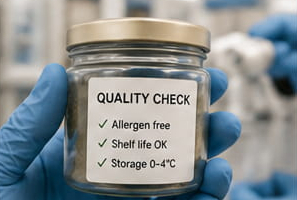
Verify quality and safety information.
Check quality, shelf life, allergens and storage needs.
3
Share
Make information easy for customers to access.
Use QR codes, product pages or buyer sheets.
4
Improve
Use data to improve and build stronger relationships.
Review sales, waste, feedback and repeat orders.
Key takeaway
Good information builds trust. Record it, check it, share it and use it to keep improving.
Benefits
Builds trust
Improves quality
Strengthens relationships
Drives repeat business
Supports a more sustainable future
Aristi Quinoa, Greece: digital traceability from field to shelf
Aristi Quinoa is a Greek plant-based food business that grows and sells quinoa with a strong focus on sustainability, responsible cultivation and product origin. The company uses digital tools to support cultivation management and smart QR codes to help customers and buyers understand where the quinoa comes from and how it moves from field to shelf.
This example is useful because it shows traceability as a communication tool and a production discipline. Customers may see the QR code, but the value behind it comes from the information collected earlier: growing methods, origin, batch details, cultivation practices and product movement. The visible digital feature depends on reliable records behind the scenes.
For a food producer, this means traceability should begin before packaging design. Supplier files, batch sheets, production notes and quality checks create the foundation. Once these are organised, they can be turned into customer-facing information, such as an origin story, product journey, sourcing statement or QR-linked page.
The practical lesson is to build the information system first. Choose one product and identify the details that should be recorded every time it is produced. Then decide which details are useful internally and which details could help customers, retailers or distributors understand the product better. This makes traceability realistic and avoids using digital features as decoration only.
Key takeaway:
Traceability works when useful production information is recorded consistently. Digital tools can then turn that information into evidence, quality control and customer trust.
Practical advice
Create one standard digital batch record for each product.
Record supplier, ingredient, date, batch, storage and production details consistently.
Use QR codes only when the linked information is clear and maintained.
Keep evidence for origin, sustainability and quality claims in one shared location.
Accessing this course requires a login. Please enter your credentials below!
Logging in is only required of you would like to track your progress and receive our Plant Power certification.
Enter your credentials below to begin tracking your progress.
We use cookies to ensure that we give you the best experience on our website. If you continue to use this site we will assume that you are happy with it.








 Builds trust
 Improves quality
 Strengthens relationships
 Drives repeat business
 Supports a more sustainable future