Funded by the European Union. Views and opinions expressed are however those of the author(s) only and do not necessarily reflect those of the European Union or the European Education and Culture Executive Agency (EACEA). Neither the European Union nor EACEA can be held responsible for them.
1.3 Improve Traceability and Product Information
Estimated learning time
6 to 8 minutes
Digital tools are most useful when they remove friction from daily work. They can help organise recipes, stock, supplier details, orders, customer questions, product images, labels, allergen information and sales records. A useful tool does not need to be complex. A well-managed spreadsheet, shared folder, calendar, online order form or simple product page can make work clearer and reduce avoidable mistakes.
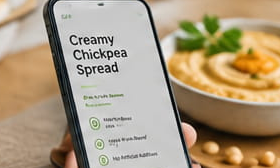
Many plant-based products need more explanation than familiar products. Customers may want to know how the product tastes, how to cook it, what it replaces, whether it contains allergens, how long it lasts and how it fits into everyday meals. Digital support can answer these questions before a customer contacts the business or decides not to buy.
Digital tools can also help teams learn from what is already happening. Sales data can show which product sizes move fastest. Stock records can show where waste occurs. Customer messages can reveal repeated questions. Social media comments can show confusion about use or preparation. This information can guide improvements in packaging, recipe cards, product pages and staff scripts.
The safest starting point is one task that is currently slow, messy or repeated. If customer orders arrive through several channels, create one order form. If product images are hard to find, create one shared folder. If staff keep asking for recipe details, create one controlled recipe file. A small tool used consistently is more valuable than an advanced system nobody maintains.
Digital tools that help customers use plant-based products
Make it easy for customers to understand, enjoy and come back.
1
Explain
Show what the product is and how it tastes.
Use clear descriptions, photos, short videos or infographics to build interest and trust.
2
Guide
Give serving ideas, recipes or pairing suggestions.
Help customers feel confident using your product in everyday meals and occasions.
3
Sell
Make ordering, stockist information or enquiries simple.
Remove barriers to purchase with easy access to key information.
4
Repeat
Use feedback and sales data to improve the offer.
Listen, learn and refine based on what customers love and what can be better.
Key takeaway
A useful digital tool should remove friction for the buyer, the customer or the team. It does not need to be advanced to be valuable – it just needs to be effective.
Examples of useful digital tools
Product information pages
Recipe videos
QR codes on packaging
Online shop or stockist locator
Customer feedback forms
Email newsletters
Plant Jammer, Denmark: AI recipe technology and food waste reduction
Plant Jammer is a Copenhagen-based food technology company that uses artificial intelligence and food science to suggest plant-based recipes based on ingredients people already have. Its technology has been used with retailers to help customers make better use of food at home and reduce avoidable waste.
The value of this example is not that every food business should build an AI tool. The lesson is that digital support can help customers use plant-based food with more confidence. When a product is new or unfamiliar, people may hesitate because they do not know how it fits into normal meals. Recipe prompts, serving suggestions, pairing ideas and ‘use what you have’ guidance can reduce that uncertainty.
This is especially relevant for ingredients, sauces, dips, plant-based meals, food boxes, snacks or seasonal products. A customer may like the idea of a product but still need a simple use case. Digital content can bridge that gap. Product pages, QR-linked recipe cards, short videos, social media posts or email tips can show how the product works in everyday cooking.
A practical way to apply this idea is to choose one product and create three simple digital supports: one serving idea, one storage or preparation tip and one recipe suggestion. These can improve customer experience, reduce repeated questions and make the product feel easier to buy again.
Key takeaway:
Digital tools should make work easier or help customers use the product with more confidence. Simple, consistent tools are often enough to create value.
Practical advice
Choose one repeated task or customer question to improve first.
Keep digital records simple, named clearly and easy for staff to update.
Use product pages, recipe cards or QR links to explain unfamiliar products.
Review customer questions regularly and turn common answers into digital content.
Accessing this course requires a login. Please enter your credentials below!
Logging in is only required of you would like to track your progress and receive our Plant Power certification.
Enter your credentials below to begin tracking your progress.
We use cookies to ensure that we give you the best experience on our website. If you continue to use this site we will assume that you are happy with it.