
Every year on 22 April, more than a billion people across 190 countries mark Earth Day. It is the largest civic observance in the world, and it began in 1970 with a simple idea: that the planet we all share deserves at least one day of our full attention.
More than fifty years on, that idea matters more than ever. The past decade has been the warmest on record. Heatwaves, floods, wildfires and droughts are arriving with a frequency and force that communities across Europe now know first hand. The natural systems we depend on, from pollinators to soil to fresh water, are under sustained pressure. Earth Day exists to remind us of something we are often too busy to see: the Earth is not the backdrop to our lives. It is the foundation of them.
And few things connect us to that foundation more directly than food.
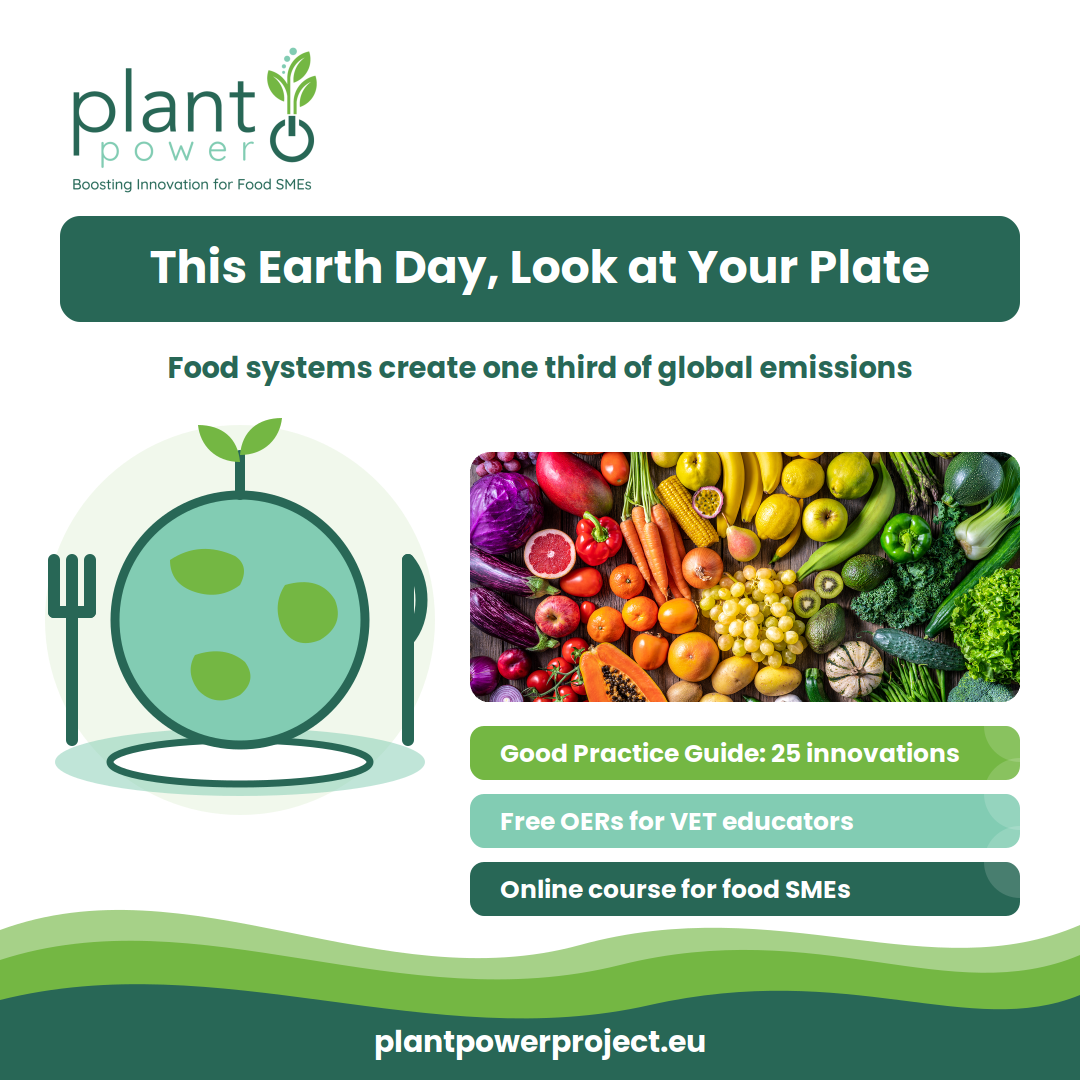
Food is where the health of the planet and the choices of ordinary people meet, three times a day. According to the United Nations, food systems account for around one third of global greenhouse gas emissions. Agriculture uses roughly half of the world's habitable land and around seventy percent of global freshwater withdrawals. How we grow, process, transport and eat food is one of the single biggest factors shaping the future of the Earth.
That can sound like a burden. We see it as an opportunity. Because if food is one of the biggest drivers of environmental pressure, it is also one of the most powerful levers for change. Research consistently shows that shifting towards more plant-rich diets is among the most effective actions available to reduce emissions, ease pressure on land and water, and protect biodiversity. The European Union recognises this too: its Farm to Fork Strategy places the transition to sustainable, healthy food systems at the heart of the European Green Deal.
The demand is already there. Across Europe, consumers are seeking out plant-based options in numbers that grow year on year, and the plant-based food market has become one of the most dynamic areas of the food industry. The question is no longer whether Europe's food sector will change. It is whether the people working in it have the skills and support to lead that change rather than be left behind by it.
That question is exactly why the Plant Power project exists.
Plant Power supports Europe's food sector in adopting plant-based innovation and sustainability. We work with the people who will actually deliver the transition: food SMEs looking to innovate and grow, vocational educators preparing the next generation of food professionals, and policymakers shaping the conditions for sustainable growth and climate action.
Our ethos is simple. Big environmental goals are achieved through practical, local action, and practical action depends on skills. A small food producer does not change its product line because of a global emissions statistic. It changes because someone in the business has the knowledge, the confidence and the tools to see the opportunity and act on it. That is the gap Plant Power was built to close.
As Dr Jane Goodall puts it: "We can create a sustainable future by eating more plants and wasting less food." We would add one thing. Creating that future is not only the work of consumers choosing differently. It is the work of producers, educators and decision makers who make the sustainable choice the available choice.
Everything Plant Power produces is free to access and designed to be used, not just read.
Our Good Practice Guide showcases twenty five real plant-based innovations from across Europe, proof of what is already working, gathered so that others can learn from it and adapt it. Our Open Educational Resources give VET educators ready-to-use training content on plant-based innovation, so sustainability skills can move into classrooms and training rooms without educators having to build materials from scratch. And our self-paced online course, with its practical workbook, helps food SMEs turn ideas into action at their own speed, in their own business.
All of it is available in five languages, because a European food transition has to speak Europe's languages.
Earth Day is a moment, and moments matter. They gather attention, spark conversations and remind us what is at stake. But the Earth is not protected by one day of attention a year. It is protected by what happens on all the other days: in kitchens, classrooms, production lines and boardrooms across Europe, where thousands of small decisions add up to the future of our food system.
This Earth Day, look at your plate. Then, if you work in food, teach food or shape food policy, take the next step.
Explore our free resources at plantpowerproject.eu and be part of a greener food future.
The Plant Power project is co-funded by the European Union.