Funded by the European Union. Views and opinions expressed are however those of the author(s) only and do not necessarily reflect those of the European Union or the European Education and Culture Executive Agency (EACEA). Neither the European Union nor EACEA can be held responsible for them.
5.3 Use Circular Thinking in Product Development
Estimated learning time
3 to 5 minutes
Circular thinking means looking at ingredients, packaging, energy and waste as part of a loop rather than a one-way process. Instead of asking only what the business can make, ask what else an ingredient, by-product or process could support.
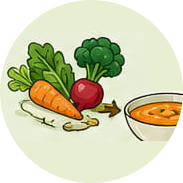
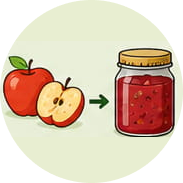
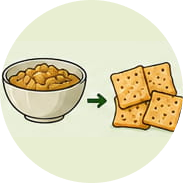
Circular thinking does not need to be complicated. A bakery might use surplus vegetables in savoury fillings. A producer might turn imperfect fruit into compote. A processor might use leftover pulp in crackers, sauces or snack products.
The strongest circular ideas still need to make commercial sense. The product must taste good, be safe, have a clear use and fit the business model.
In food production, circular thinking can include:
using by-products
reducing packaging waste
designing products with fewer losses
using surplus ingredients creatively
improving storage to avoid spoilage
finding value in secondary ingredients
working with local producers or processors
Use Circular Thinking in Product Development
Look at ingredients, processes and materials as part of a loop. Every resource can have more than one life.
Reuse SurplusTurn surplus ingredients into new products
Reduce WasteUse imperfect produce in compotes, purees or fillings
Use By-ProductsTurn leftover pulp, skins or solids into snacks or ingredients
Less WasteMore Value
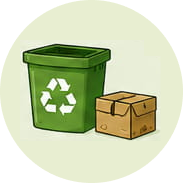
Reduce PackagingChoose reusable, recyclable or minimal packaging
Local PartnershipsWork with local producers and processors
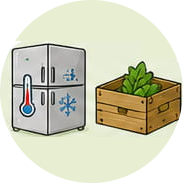
Improve StorageBetter storage means less spoilage and waste
This interview with a Greek plant-based food business discusses circular economy, food waste reduction, sustainable sourcing, collaboration with local producers and innovation in plant-based production.
The example is useful because it connects sustainability with practical food business decisions. Circular thinking is not only an environmental idea. It can support sourcing, reduce waste, create new value and strengthen collaboration with producers.
The lesson is to look at one current process and identify what is being underused. This could be a by-product, seasonal surplus, packaging choice or local partnership opportunity.
Key takeaway:
Circular thinking helps businesses reduce waste and create value from resources that might otherwise be overlooked.
Practical advice
Identify one by-product, surplus or underused ingredient.
Ask whether it could support a new product or process.
Check safety, quality and customer value before developing it.
Accessing this course requires a login. Please enter your credentials below!
Logging in is only required of you would like to track your progress and receive our Plant Power certification.
Enter your credentials below to begin tracking your progress.
We use cookies to ensure that we give you the best experience on our website. If you continue to use this site we will assume that you are happy with it.