

Plant-based food innovation is no longer only a trend. It is becoming an important opportunity for small and medium-sized food businesses that want to respond to changing customer expectations, sustainability goals and the growing demand for healthier, future-oriented food choices.
Across Europe, many food SMEs are exploring how to introduce plant-based products, improve existing recipes, reduce environmental impact or create new menu opportunities. However, innovation can often feel complex, especially for smaller businesses with limited time, resources or technical support. This is where practical, accessible and targeted learning becomes essential.
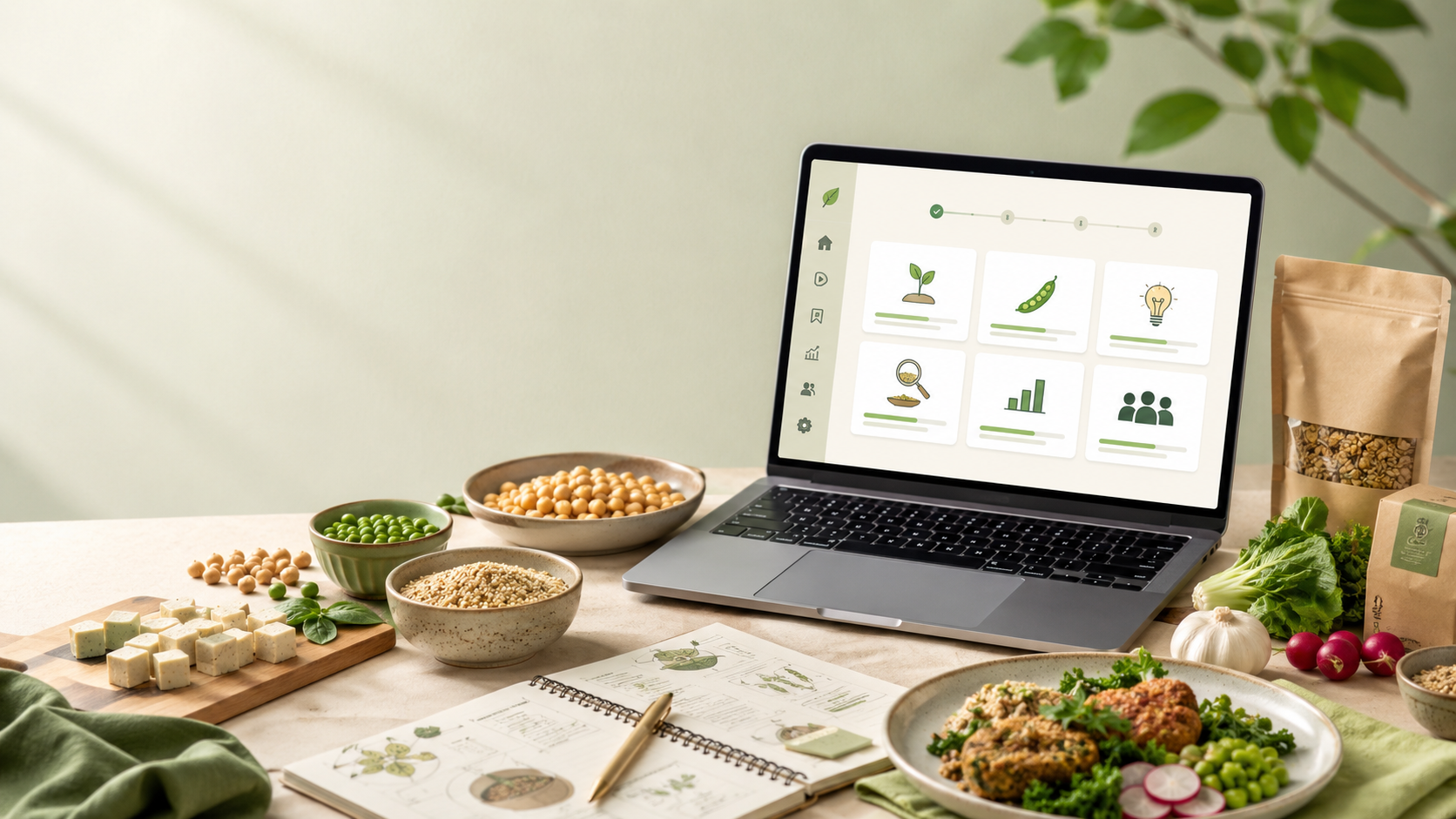
As part of the Plant Power project, partners are currently developing a new online SME course built around bite-sized learning modules. These short and focused learning units are designed to help food businesses understand plant-based innovation step by step and apply new ideas directly in their own business context.
Why bite-sized learning?
For many SMEs, time is one of the biggest barriers to training. Business owners, managers and employees often need learning resources that are flexible, easy to follow and directly connected to everyday business decisions.
The Plant Power SME course responds to this need by offering practical learning in a bite-sized format. Instead of long theoretical content, the course focuses on clear topics, useful examples, case studies, videos and practical resources that can support real decision-making in food businesses.
The aim is simple: to make plant-based innovation more understandable, more accessible and more useful for SMEs.
Six practical modules for food SMEs
The online SME course will include six bite-sized modules, each focused on a specific area of plant-based food business development.
1. Using Innovation and Digital Tools to Grow Your Plant-Based Food Business
This module introduces practical ways in which innovation and digital tools can support plant-based product development, business growth, sustainability and customer engagement. It will help SMEs understand how digital solutions can be used not only for promotion, but also for product development, communication, customer feedback and smarter business decisions.
2. Adding Value to Plant-Based Products for Your Food Business
Plant-based products need to offer more than just an alternative to traditional food. They should be attractive, trustworthy and relevant to customers. This module focuses on how SMEs can add value through better ingredients, processing methods, nutrition, shelf life, labelling and customer trust. It supports businesses in thinking about product quality from both a technical and customer perspective.
3. Creating Retail-Ready Plant-Based Products for Your Food Business
Bringing a product to the market requires more than a good idea. SMEs need to consider taste, packaging, customer needs, sustainability goals and retail expectations. This module explores how plant-based ideas can be developed into products that are more suitable for shelves, shops, food services or other sales channels.
4. Using Local Ingredients to Build Stronger Plant-Based Food Products
Local and regional ingredients can make plant-based products more authentic, traceable and sustainable. This module highlights how SMEs can use local resources to create stronger product stories, reduce environmental impact and connect more closely with regional food systems. It also encourages businesses to think about the value of origin, transparency and local identity.
5. Using Plant Power to Build a More Sustainable Food Business
Plant-based innovation is closely connected to sustainability. This module explores how food businesses can link product development with climate action, waste reduction, food justice, customer demand and long-term business resilience. It encourages SMEs to see sustainability not only as a responsibility, but also as a source of innovation and competitiveness.
6. Creating Plant-Based Menu Opportunities for Your Food Business
Plant-based development is not only relevant for packaged products. Restaurants, cafés, catering services and other food businesses can also benefit from new plant-based menu opportunities. This module focuses on how SMEs can turn plant-based menu ideas into practical, customer-focused offers that respond to changing tastes and expectations.
Local examples make learning more relevant
A key ambition of the Plant Power SME course is to make the learning experience practical and connected to real business contexts. For this reason, the course will include examples, case studies and videos from existing Plant Power materials where relevant.
At the same time, project partners are also gathering additional local examples, SME stories, videos and useful resources. These examples will help further localise the course and make it more relevant for different regions, business environments and food cultures across Europe.
Local stories can show how plant-based innovation works in practice: how a small food business improved a recipe, introduced a new product, used local ingredients, communicated sustainability or responded to customer demand. These real-life examples can inspire other SMEs and demonstrate that innovation is possible at different scales.
Supporting SMEs in the green food transition
The Plant Power SME course is being developed to support businesses that want to take practical steps toward plant-based innovation and sustainability. By combining short learning modules, real examples and accessible resources, the course will help SMEs build knowledge, confidence and new ideas.
For food SMEs, plant-based innovation can open new opportunities for product development, customer engagement, sustainability and market growth. For educators and trainers, the course can also provide useful material to support vocational education and training in the food sector.
Through this work, Plant Power continues to contribute to a greener, more innovative and more resilient European food industry.
The future of food innovation does not always begin with large-scale transformation. Sometimes, it starts with one practical idea, one improved product, one local ingredient or one small business ready to try something new.
That is the power of bite-sized learning.