Funded by the European Union. Views and opinions expressed are however those of the author(s) only and do not necessarily reflect those of the European Union or the European Education and Culture Executive Agency (EACEA). Neither the European Union nor EACEA can be held responsible for them.
2.3 Improve Shelf Life Without Losing Product Quality
Estimated learning time
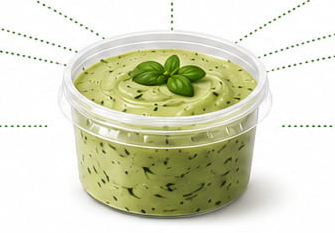
Shelf life is one of the biggest operational challenges in plant-based food production. A product may taste excellent immediately after preparation but lose quality quickly during storage, transport or retail display.
3 to 5 minutes
Short shelf life creates several business pressures:
increased waste
stock losses
transport limitations
customer complaints
tighter production schedules
reduced retail opportunities
Improving shelf life does not always require preservatives. In many cases, shelf life improves when businesses manage:
moisture
oxygen exposure
filling methods
packaging quality
refrigeration stability
hygiene procedures
ingredient balance
Plant-based products can be especially sensitive because many contain high moisture levels and fewer traditional preservatives.
Appearance and texture also matter. Customers expect products to remain visually appealing, stable and easy to use.
2.3
Improve shelf life without losing quality
Moisture
Oxygen
Filling
Packaging
Refrigeration
Hygiene
Ingredient Balance
Less Waste
Happier Customers
LUNTER
Plant-Based Goodness
Shelf Life Journey
Production
→
Transport
→
Retail Display
→
After Opening
What Can Go Wrong?
Separation
Texture Change
Colour Loss
Off-Flavours
Spoilage
Key Takeaway
Shelf life affects waste, transport, quality and trust.
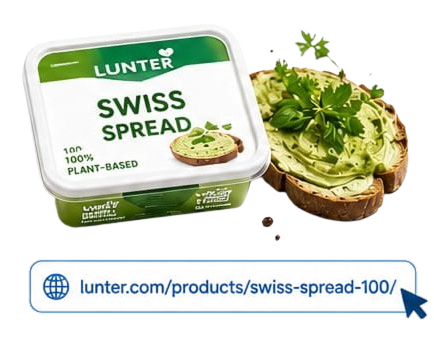
Lunter is a Dutch producer specialising in vegetarian and plant-based food products.
The company focuses strongly on product consistency, ingredient transparency and customer confidence.
This example is useful because shelf life is not only a technical issue. It also affects how customers experience the product. A product that separates, dries out or changes flavour too quickly may reduce repeat purchases even if it remains technically safe.
Clear labelling also becomes important when products change over time. Storage instructions, use-by guidance and handling advice help customers understand how to use products correctly.
Questions worth reviewing include:
Does the packaging protect the product properly?
Does the product behave differently after opening?
Are storage instructions easy to understand?
Lunter demonstrates how packaging, quality control and customer communication work together.
A practical next step is to monitor one product across its full shelf-life period and record visible changes consistently.
Key takeaway:
should be reworded to "Shelf life affects waste, transport, product quality and customer trust. Better use of technology, monitoring and packaging decisions improve long-term stability
Practical advice
Monitor one product across its full shelf-life period.
Record texture, flavour and colour changes consistently.
Review whether packaging protects the product properly.
Accessing this course requires a login. Please enter your credentials below!
Logging in is only required of you would like to track your progress and receive our Plant Power certification.
Enter your credentials below to begin tracking your progress.
We use cookies to ensure that we give you the best experience on our website. If you continue to use this site we will assume that you are happy with it.